This post first appeared in The Upside-Down Funnel, our newsletter on Substack.
Early on at Upside, I spent a full day reading everything behind one customer’s enterprise deal. A partner had convinced an executive to take a look, the executive forwarded a note to a manager, who forwarded it to the team. That chain was buried in hundreds of sales and marketing interactions, in a forward of a forward of a forward inside a Salesforce task. Even the customer’s own team didn’t know that’s what had sparked their buying cycle.
In the last issue, I said I was working on a paper about those missing pieces. We’ve now analyzed 521 deals across 13 B2B companies. The findings help explain why so many marketers look at attribution reports and think: that doesn’t sound like what actually happened.
The week in one minute
What we’re pondering: What the untracked half changes, and what a CMO does when an agent helps choose the shortlist.
Worth your attention: Salesforce buying Braze, Ethan Smith’s ChatGPT ads study, missing tracking tags, in-person trust and a conversation with Dave Steer worth revisiting.
GTME jobs: What current openings tell us about the role, plus two jobs to check out.
Stranger than fiction: The banner planes over SF now have a sightings log.
What we’re pondering
1. What happens when we finally read the missing half of what matters on deals?
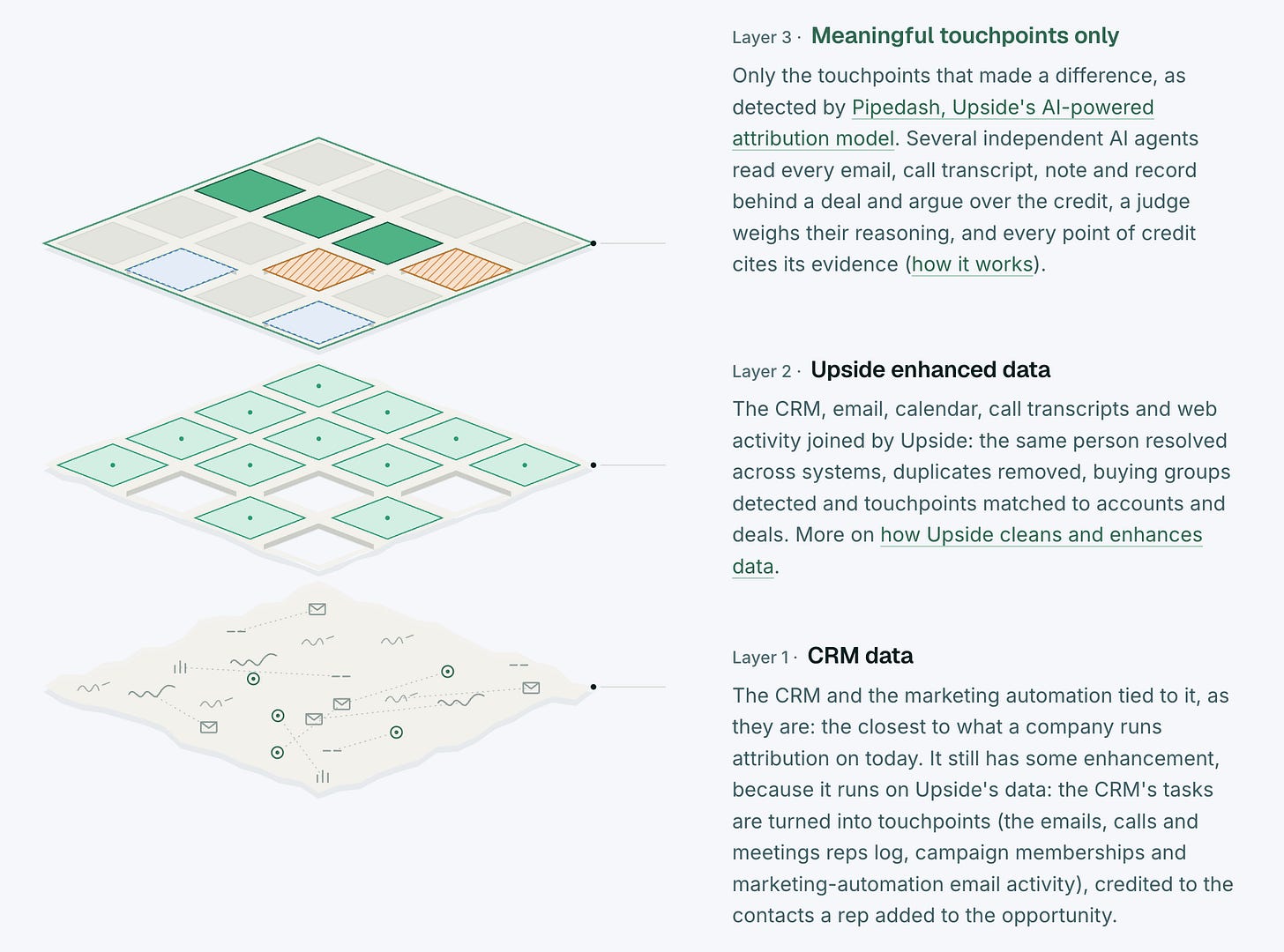
We ran the same attribution models on three versions of the data: the CRM and its marketing automation, a fuller account history joining the connected systems, and the meaningful touchpoints our AI analysis found by reading the underlying conversations.
A few findings stood out:
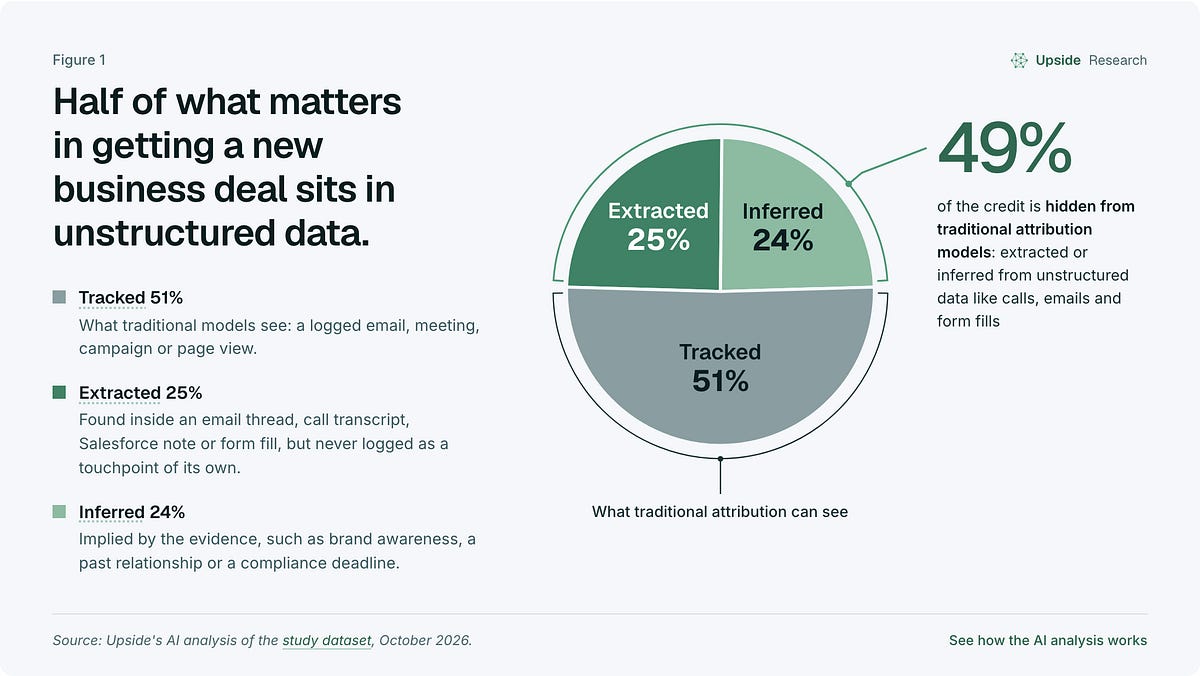
49% of the credit in our AI analysis was assigned to extracted touchpoints or inferred factors. Of that total credit, 25% came from touchpoints extracted from emails, calls, notes and form fills. Another 24% was inferred from context, such as a prior relationship or a reason the buyer was ready now.
With better data, marketing’s credit increases on every model.
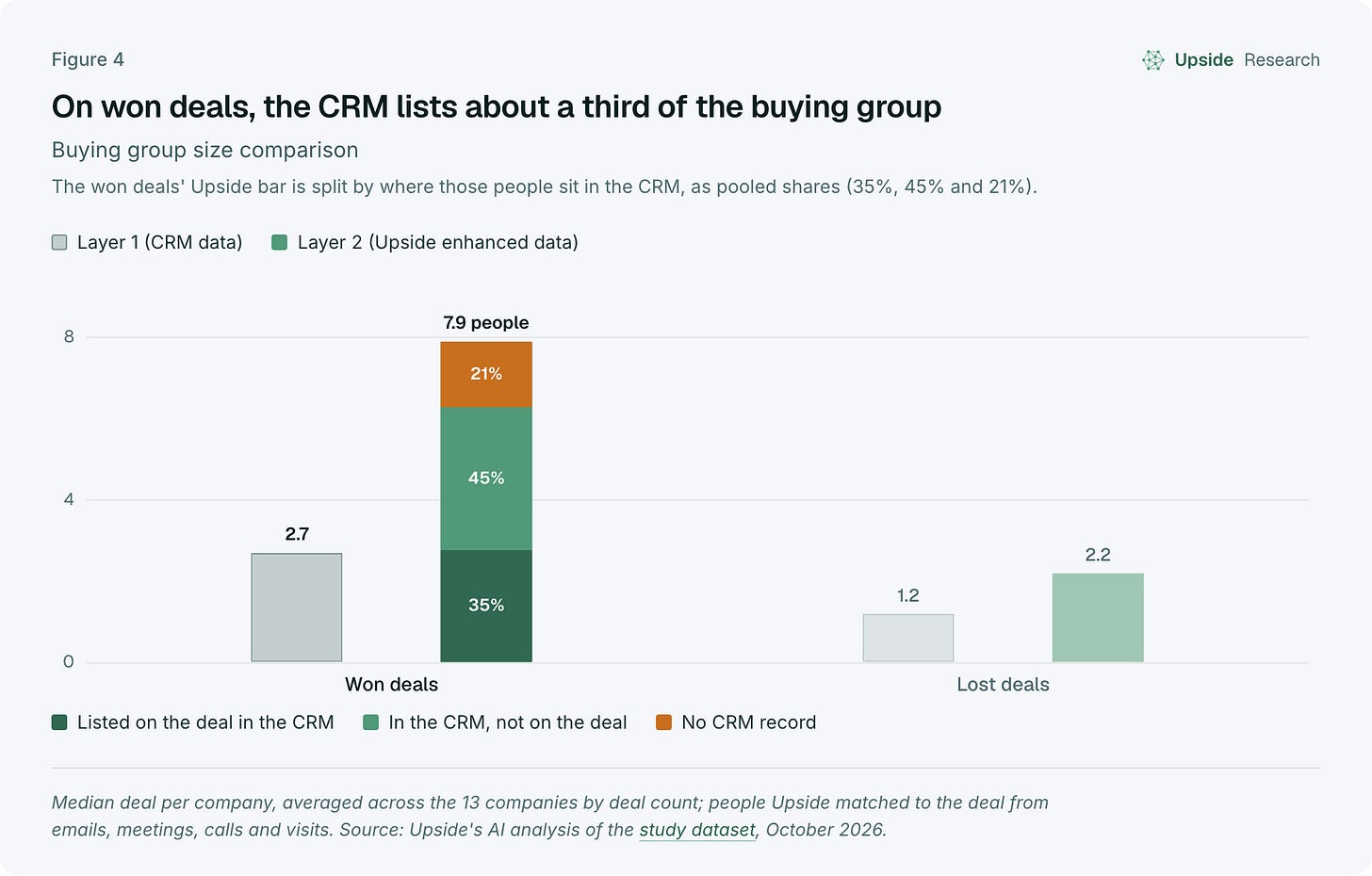
Won deals showed 2.7 people in CRM opportunity contact roles, compared with 7.9 in the fuller buying group. Many of the missing people already existed in the CRM; they just weren’t attached to the deal.
Brand and advocacy started 28% of deals. The opportunity source field credited them with 5.6%.
Unanswered one-way seller emails filled 45% of logged touches but earned 3.7% of the credit.
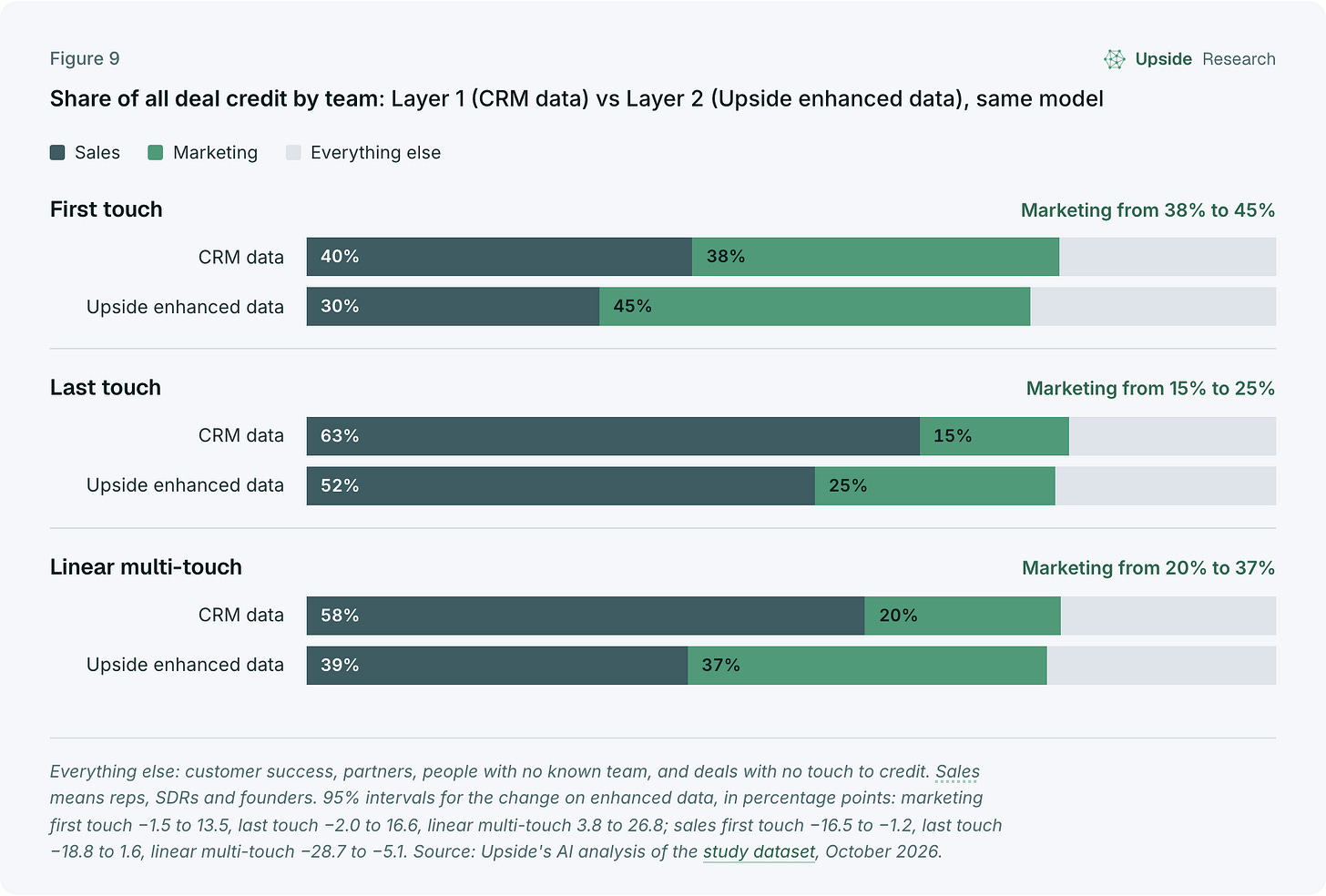
At Branch, marketing organized VIP dinners and SDRs filled them with one-to-one invitations. The program worked because the teams worked together. If each team’s compensation depends on winning a bigger slice of attribution, helping the other team can make your own number worse.
When a measure becomes a target, it ceases to be a good measure.
Goodhart's law
I want this research to help teams decide what to investigate and repeat and help marketers build better diagnostic tools.
Read the full paper: The Untracked Half
2. What does a CMO do when an agent helps choose the shortlist?
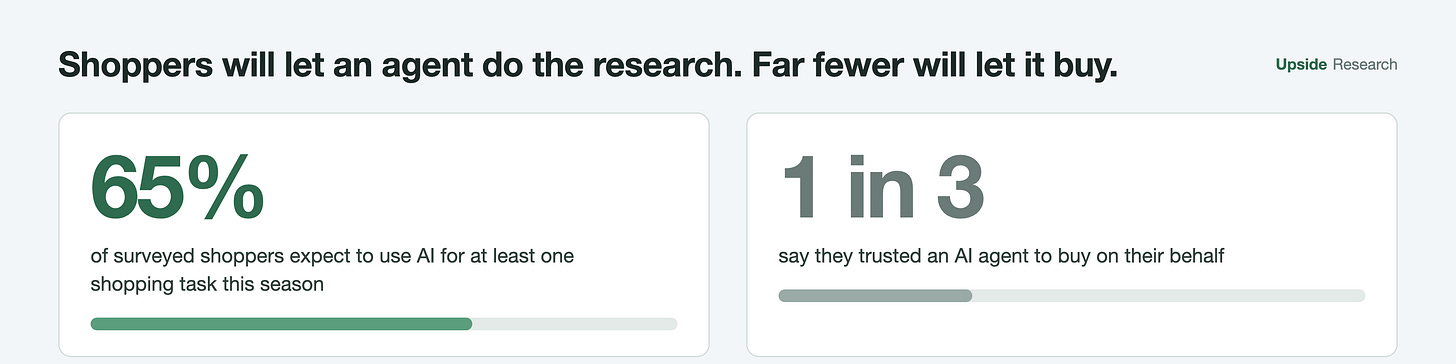
Shopify’s October 6 holiday research has an interesting gap: 65% of surveyed shoppers expect to use AI for at least one shopping task this holiday season, but only about a third say they trust an agent to buy on their behalf.
That is consumer research, so we shouldn’t pretend it measures how enterprise software gets bought. But it raises a useful question for B2B: when an agent does more of the research and maybe even the decision of what to buy, what becomes the role of the GTM team?
In my conversation with Dave Steer at 1mind’s Elite summit, organized by Amanda Kahlow (which was amazing, by the way), we talked about how it still comes down to trust. Part of the work is making the product understandable to a machine. Can it find a clear answer about what you do, who you help and the evidence behind your claims? Part is giving the person enough confidence to put their name behind the decision. A customer who will take a reference call can matter here. So can a peer who says, “We use this.”
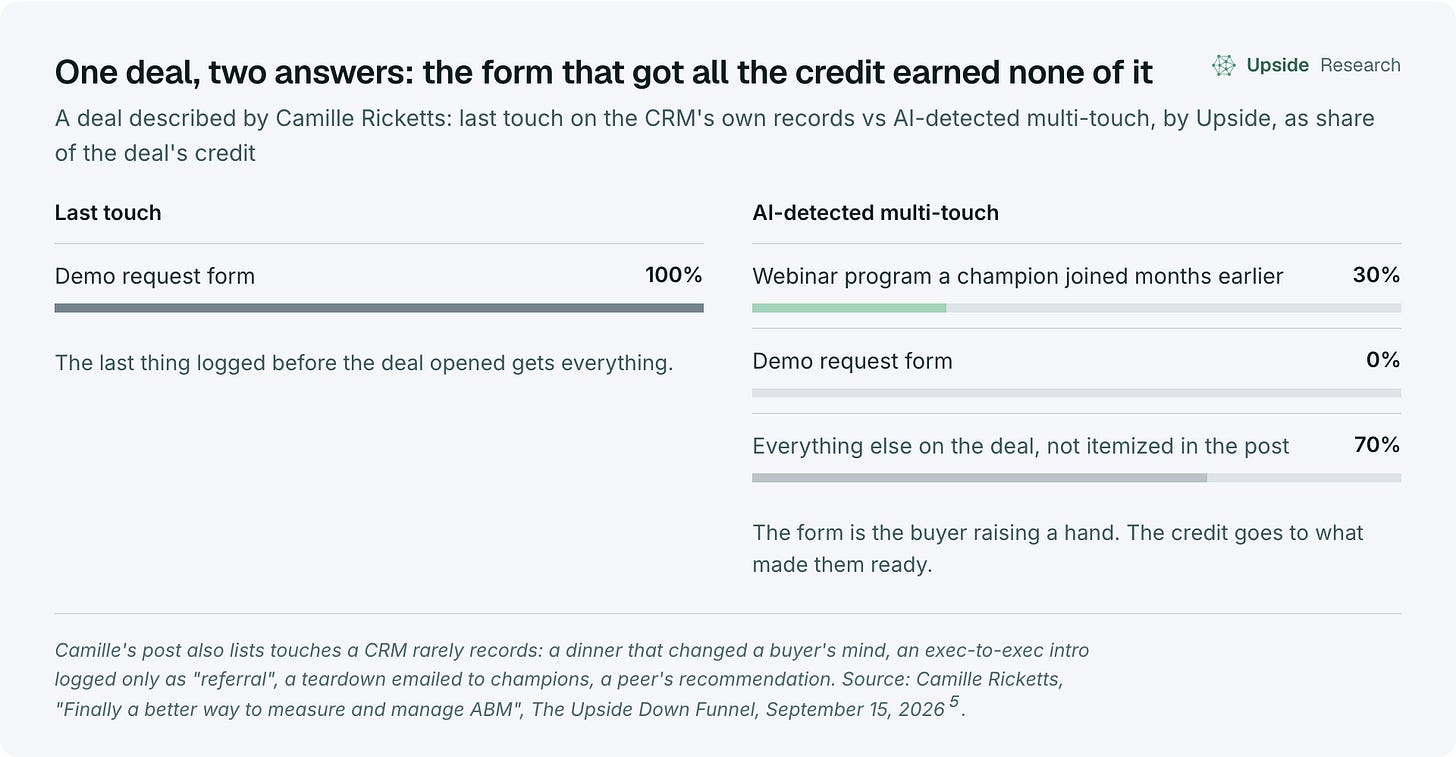
The attribution paper made that second part a lot more obvious — a buyer can arrive with a recommendation and an existing relationship, then appear in the dashboard as a form fill. If more of the research moves into AI, we’ll need to get better at preserving the story behind that hand raise.
Worth your attention
Salesforce is buying Braze for about $5.66 billion. Announced October 20: all cash at $47.50 a share, expected to close in Salesforce’s fiscal 2028 pending approvals. Braze’s real-time engagement and AI decisioning are headed for Marketing Cloud, Data 360 and Agentforce. Two things stand out. The price: Jason Lemkin points out that is about 6.8x revenue, while HubSpot, Klaviyo and Adobe trade at roughly 3 to 4x, so Salesforce paid up for a product that competes with its own Marketing Cloud. The direction: live customer behavior feeding the agent layer is the whole pitch, and it is the same bet in B2B once account journeys are complete enough for an agent to act on.
Ethan Smith’s ChatGPT ads study. Graphite and Similarweb report that ads reached 43% of eligible U.S. ChatGPT users in September. Worldwide weekly ad click-through rates rose 112% between March 30 and September 20. That leaves a question I’d want answered before moving budget: do those clicks turn into good customers? The study combines observed user activity and ad-creative analysis, rather than a randomized test of incremental sales. I’d use it to design a small test that measures conversion quality and cost, not just clicks. Read the report.
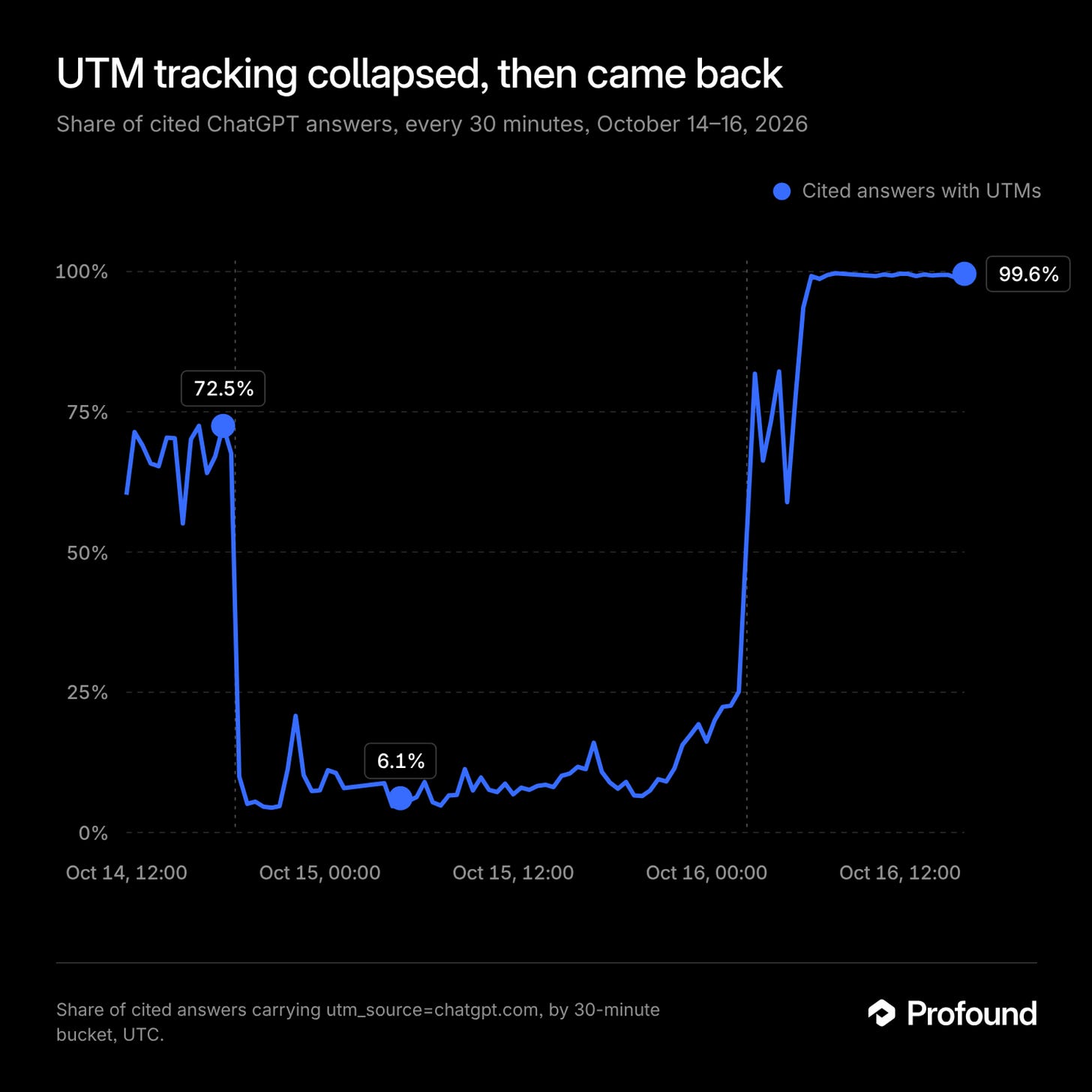
A missing tag can look like disappearing demand. Profound observed ChatGPT answers losing UTM tags beginning October 8. By October 16, about 99% of answers with cited links in its sample again had at least one tagged source link. That recovery doesn’t restore the missing history. If your reported ChatGPT referrals dipped during that window, annotate it before judging AEO performance. Missing tags can obscure the source of a visit; the drop alone doesn’t tell you how demand changed.
People still put a lot of trust in meeting people. Freeman’s October 8 release says 93% of surveyed B2B buyers put more trust in companies they’ve met in person than in analyst reports or AI-generated summaries. The Harris Poll surveyed 412 B2B decision-makers on behalf of an events company, so this reflects self-reported attitudes rather than the whole market, but it’s still an interesting finding.
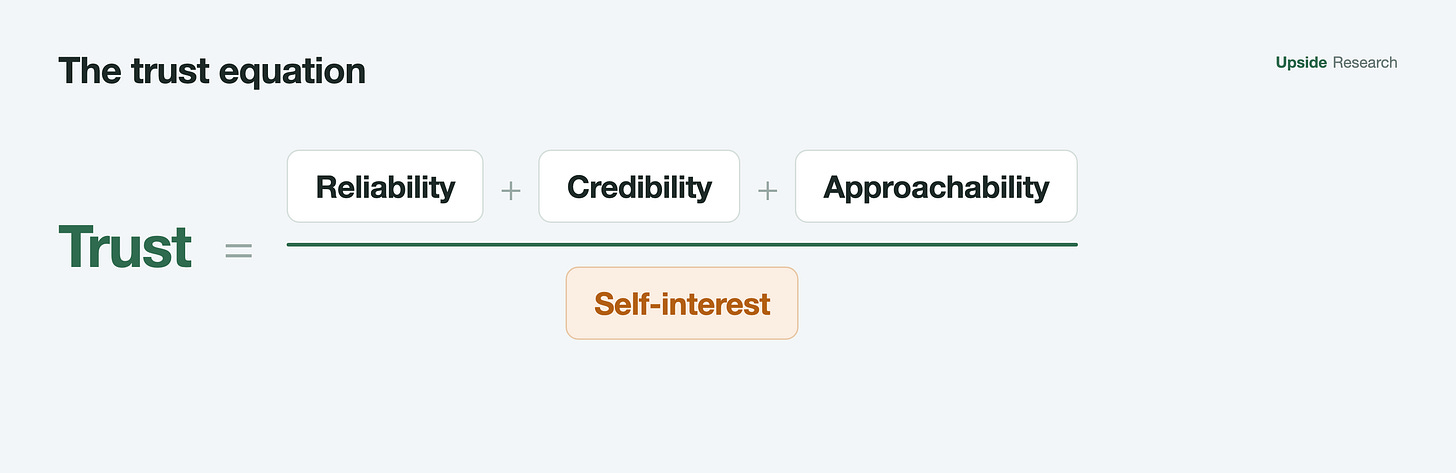
An older conversation that feels relevant again. In our February Future of Marketing episode, Dave Steer described trust as reliability, credibility and approachability, divided by self-interest. It’s worth revisiting as we start thinking beyond building trust with humans and start exploring how we can get agents to trust us and our work.
GTME jobs and trends
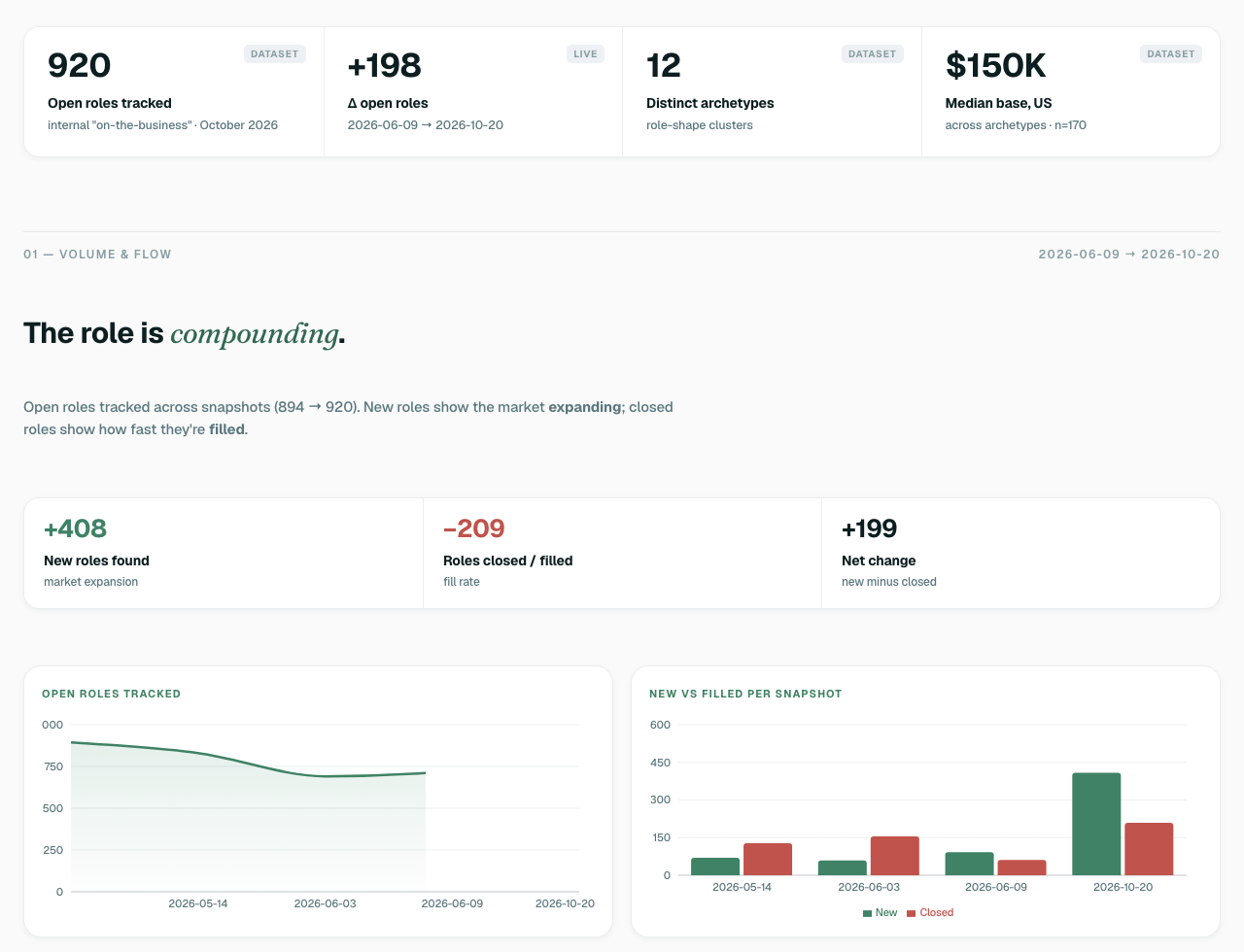
A pattern we noticed in the GTME market: companies want people who can build a tool, get it into production and also keep it useful. Vercel is looking for someone who can ship Next.js apps; Cresta wants someone who writes code against Salesforce, Gong and Clay to automate account prioritization and deal execution. AssemblyAI is looking for software engineering inside the revenue team, and Adyen welcomes technical-operations backgrounds and expects AI-assisted coding. These teams all need someone who can both build and maintain systems around commercial problems. Two cool roles:
Vercel, GTM Engineer: Build AI apps and revenue workflows with Sales, Marketing, Success and Data. San Francisco base pay is $180,000–$295,000.
Cresta, AI Engineer, GTM: Remote, US. Work directly with the CEO, CRO and CMO to automate account prioritization, deal prep and quoting on top of Salesforce, Gong and Clay. Base pay is $150,000–$230,000, plus equity.
Stranger than fiction
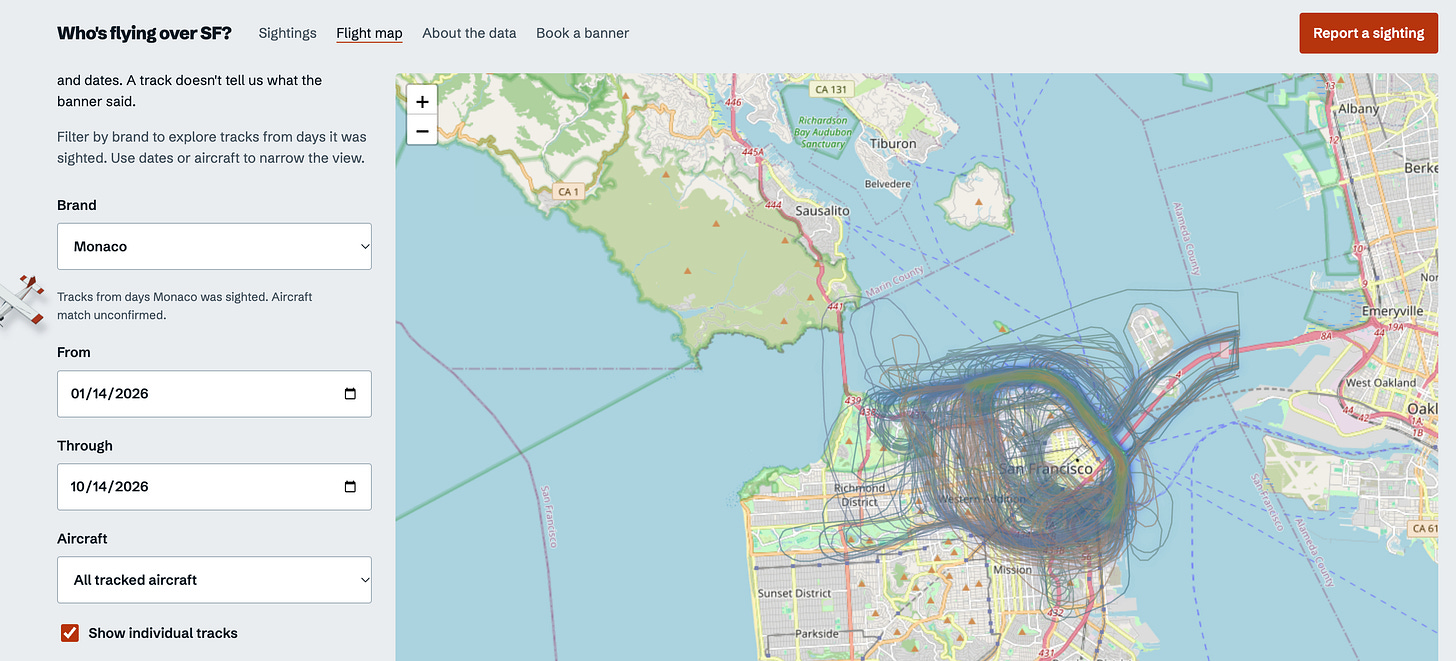
The banner planes over San Francisco have a sightings log
SF is getting quite crazy when it comes to planes with banners, so my co-founder Dan built Who’s flying over SF to track them all. October alone has Vercel’s blimp over Ship SF, HappyRobot’s blimp during Tech Week and a Monaco plane that Dolores Park has opinions about.