

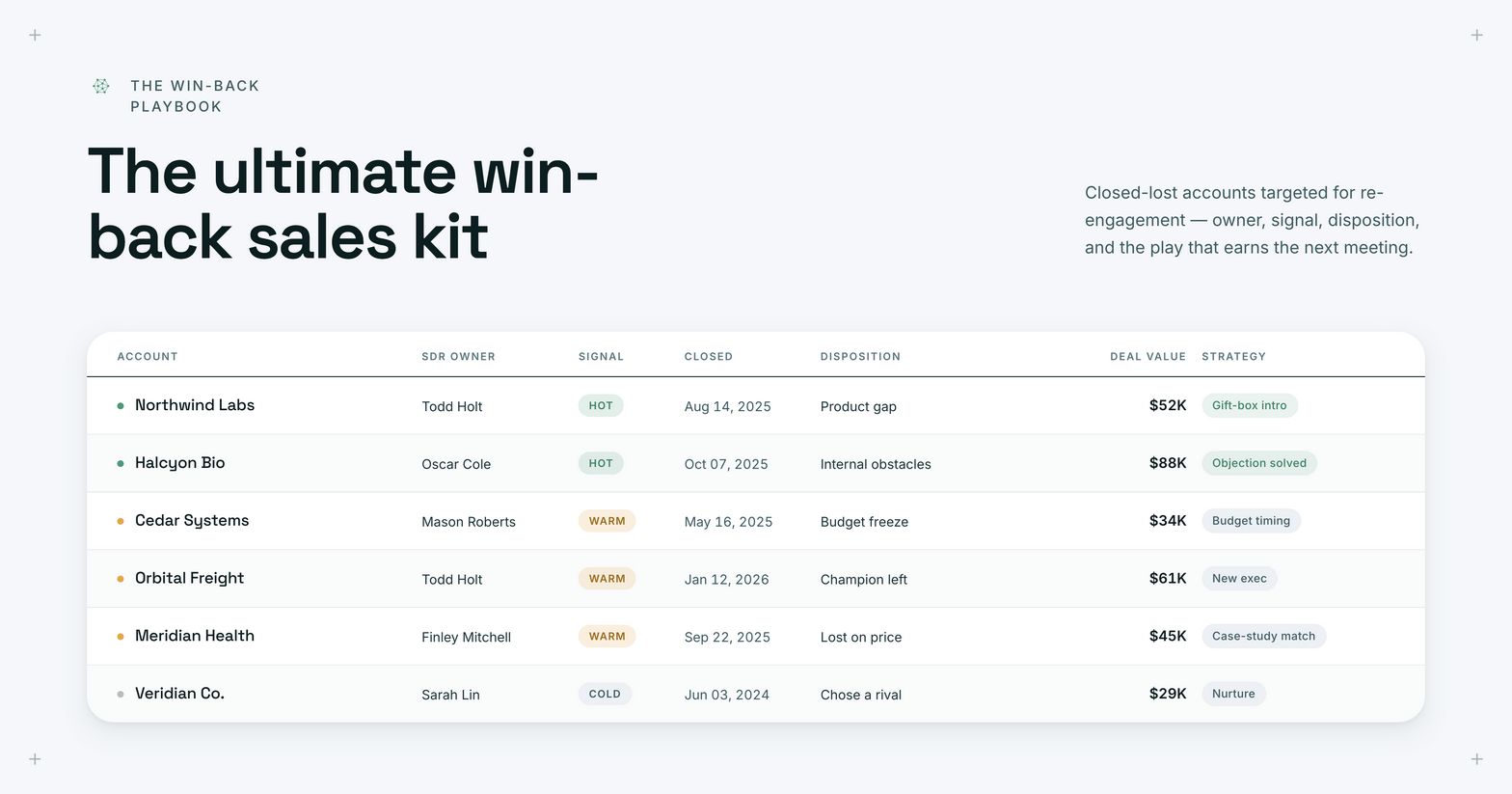
Every sales team has a pile of closed-lost deals they treat as dead in the water. It's unfortunate, but it's true. The usual next step is a generic "just checking in, here's what's new" email, written reluctantly or fired off by an automated workflow, hoping someone bites. But that's the same recycled outreach that lost the deal in the first place. If a prospect passed once, why would the second attempt land any better?
So we tested an alternative: custom win-back kits for 100 closed-lost accounts that saw a demo once and passed. The result was outstanding. Turns out teams are far more willing to re-engage when the follow-up isn't mass produced. Who would have thought! Deals aren't dead, and treating them that way only does more damage. The follow-ups are what's dead. Here's how you can turn them around too.
Building it
So how do you actually put one of these together? The recipe is simpler than it sounds. Tell the agent what you want, point it at your data, and let it work. Here's the sequence we followed.
Prior to building, do some thought work to identify the sections you want in every account's kit. The strongest kits we've seen from customers include:
- Why you lost the deal. Sometimes this is well documented, but often it has to be inferred from account history. AI is already capable of this when you give it the data in a structured format. Upside helps with the unstructured, parsing and ingesting CRM notes, call transcripts, and email threads to give you a full understanding of the deal history.
- What the customer cared about. Pull this from a summary of all previous opportunity notes and calls, including transcript summaries.
- Talking points and objection handling. Map each contact's role to their business concerns.
- A draft email sequence. Write one for every company and contact.
- A targeted approach plan by person. Decide the specific play that earns the next meeting with each contact.
The best plans get personal. One contact collected wine, so the play was a gift box to earn the meeting. Another account's budget planning cycle was about to open, making the timing finally right. A third had a pain point the product now solves outright. Each is a different door in, and the kit tells the rep which one to use.
Now here are the steps to create it and scale it with AI:
1. Pull the external signals (Tool: Exa)
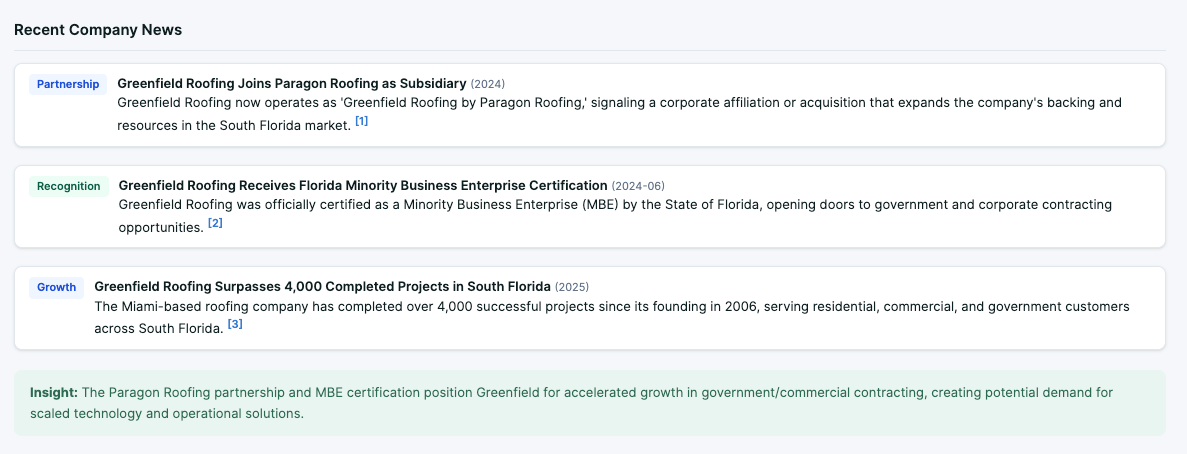
Getting up to date with customer and industry news is essential for generating an updated, bespoke approach.
- Leverage an external signal engine to surface what's going on at an account in real time. We suggest Exa: its strength lies in niche, specific discovery and it's built for AI-native and semantic querying.
- Look for funding, hiring, leadership shuffles, expansion, or new initiatives. Find anything that hints a closed-lost account's situation has changed since they passed. This puts you in a great position to find new angles in with their team.
2. Contextualize all signals (Tool: Upside)
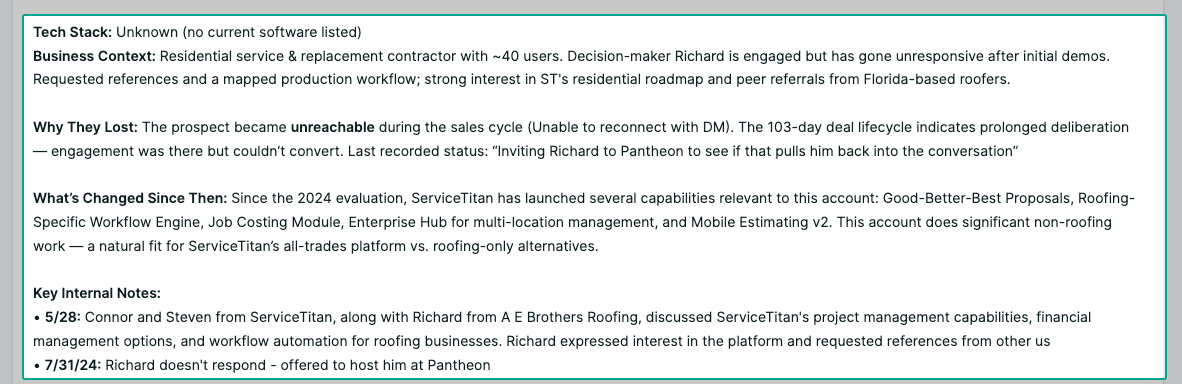
An external signal means nothing without the history sitting behind it: what the account evaluated, who was in the room, and why they walked.
- Unify and deduplicate your touchpoints for internal sources. The agent needs one clean account story instead of three systems stitched together that all disagree with each other. This is the part Upside handles for you.
- Connect data from external signals to cleaned internal data. The goal is to have every external signal land against the real context of the deal instead of floating on its own.
3. Answer the question that lost the deal (Tool: Claude x Upside MCP)

A kit that can say "you passed because of X, and here's exactly what we fixed" is worth more than a hundred generic feature lists. That's the aim here.
- For each account, use AI to pin down why you actually lost. Find the objection, the gap, the dealbreaker. These results determine the perspective with which you can approach the buying group.
- Answer the question head-on: have you solved it since? Take the enhancements you've shipped since they last looked and tie each one back to that account's specific interests for the highest chance of re-engagement.
4. Arm the rep (Tool: Upside)
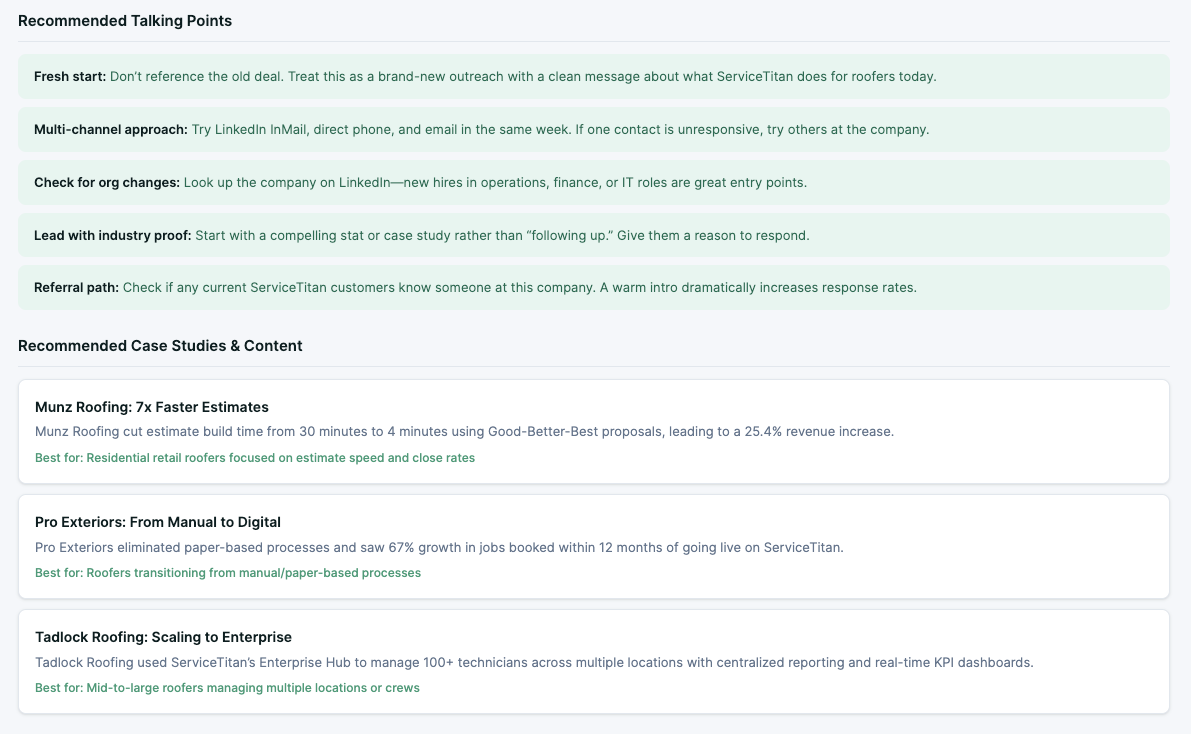
Build the part the rep actually uses. The more details you include, the easier it will be for the rep to act upon the information and close deals.
- Map out the important contacts and what each one cares about. Pull from both first-party conversations and third-party research. Knowing who to engage is just as important as knowing how to engage; the right person can open a new door for you.
- Turn the contact list into talking points and objection handling. Map each person's role to their business concerns. By anticipating personalized concerns, reps come to the meeting one step ahead.
- Draft an email sequence for every company and contact. Trace each one back to something real that account said or a signal you just surfaced — personalization is the key here.
5. Scale and filter (Tool: Upside)
Run the whole thing across your list.
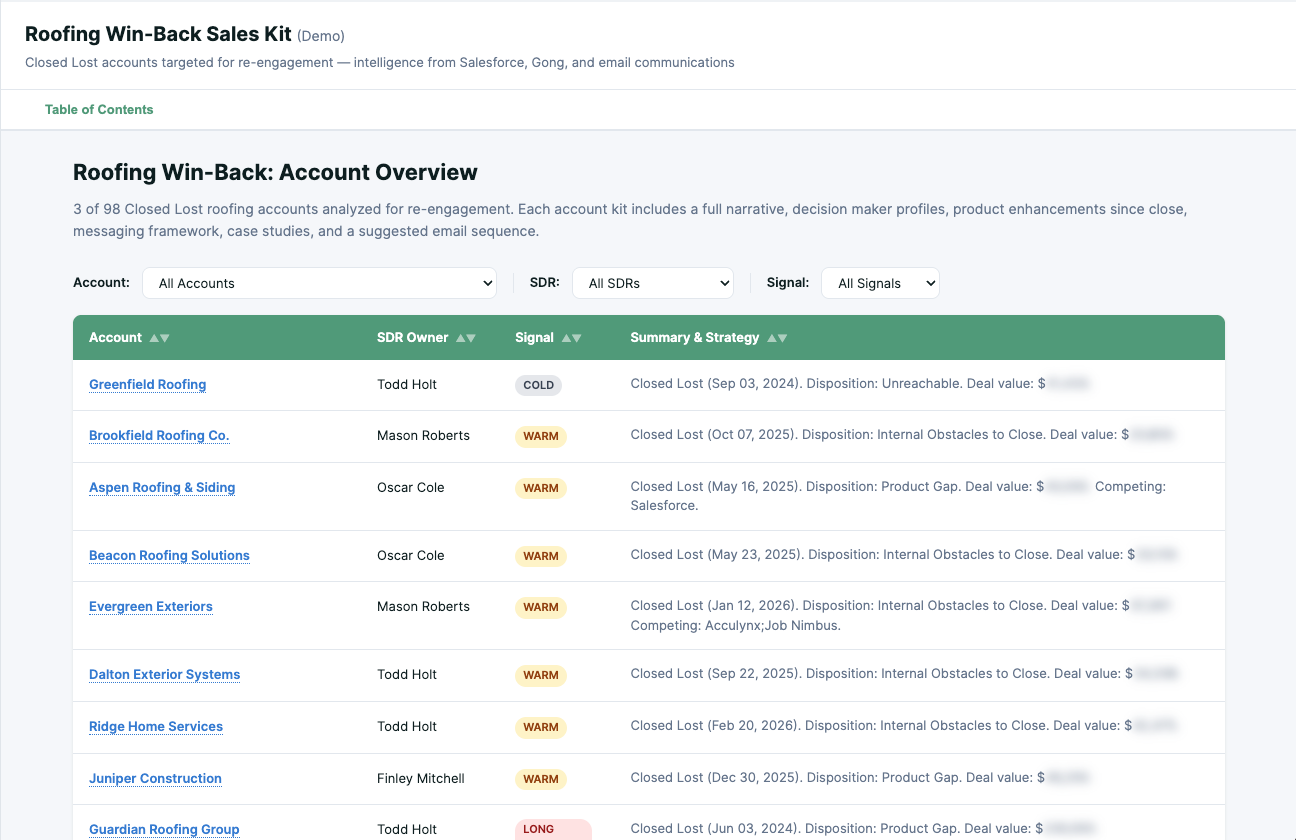
- Build a single filterable view where every account shows its owner, signal strength, and recommended strategy. This is what turns a hundred kits into something a rep can actually work, sorting the full list down to the ten worth a call this morning, instead of staring at a wall of accounts and not knowing where to start. Upside's MCP can help build this view with live data.
What we didn't expect
The agent went well beyond our initial brief, and two surprises stood out. Pointed at our positioning docs, it started generating mini battle cards tailored to each account's specific competitors. Pointed at the case study library, it pulled the exact stats and testimonials that mapped to each account's concerns, without ever being told which to use.
This is a pattern we keep seeing: once the data foundation is in place (which Upside handles for you), the agent finds angles a human would never have time to chase. The kit got better than the person who specced it.
Try it yourself — drop this into an agent connected to the Upside MCP:
Build me a Win-Back Sales Kit for my closed-lost accounts that reached a demo before passing. For each account, generate: a re-engagement assessment with a signal-strength score and recommended strategy; an account narrative covering what they evaluated, why they passed, and recent news that makes now worth a second look; a contact map with what each decision-maker cares about and the objections they raised; the product enhancements shipped since they last engaged, mapped to those specific objections; the case studies and proof points that match their concerns; and a draft email sequence per contact. Then give me a filterable view across all accounts with owner, signal strength, and strategy.The result
With Upside, going from idea to draft took a day. Implementing feedback took another. Two days, start to finish, for a custom system covering a hundred accounts, each with their own narratives, contacts, and history.
The reason closed-lost lists go stale is not about strategy; everyone knows that a personalized approach beats a generic one. It was the time, effort, and money going into each view. A hundred accounts, analyzed properly, takes weeks of manual work nobody has the bandwidth to do. Lists sit untouched or they get a lazy blast that goes unnoticed.
When dossiers are rebuilt with AI and context, the story changes. Reps actually start re-engaging and selling, walking into calls already knowing what the account saw last time, why they passed, what's changed, and which proof points to lead with. The prep that used to define the ceiling of how many accounts you could reopen doesn't serve as a constraint anymore, and closed-lost deals start winning.