About
Cresta is the unified platform for human agents and AI agents, transforming customer experience for Fortune 500 contact centers. Customers include Cox Communications, United Airlines, Intuit, and CVS.
Industry
Customer Experience / AI for Contact Centers
Company size
500+ employees
Headquarters
San Francisco, California
Founded
2017
Specialties
AI Agents, Agent Assist, Conversation Intelligence, Quality Management Automation, Contact Center AI
See it for yourself
Book a demo and see a live, customer-specific account rebuilt into the complete record every GTM team can trust.
Request demo
VP, GTM & Strategic Operations

Head of GTM Analytics
Deep Research Replaced Weeks of Manual Analysis with Insight at Every QBR
Weeks of Gong Analysis → Under a Day
Deep research that previously took contractors or staff weeks of Gong-transcript review now completes in under a day, freeing a small GTM ops team to act on insights instead of gathering them.
Every Deal Scored for Messaging Adherence
Upside scores every closed deal against PMM-defined messaging, fueling AE coaching, win-rate analysis, and a feedback loop back to product marketing.
Persona-Level Insight Reshaped Churn Strategy
Sentiment analysis showed champions almost universally loved Cresta even on churned deals. The gap was with economic buyers, and the finding drove a leadership-level push to engage CFOs.
Upside replaced manual transcript work with strategic, AI-driven insight.
- From Weeks of Transcript Review to Same-Day Insight: Deep transcript analysis that once consumed weeks of an ops hire’s time now runs in under a day.
- Deal Reality, Reconstructed in Natural Language: Milestone analysis turns messy multi-month enterprise cycles into plain-language deal stories that capture SDR follow-up, conference touches, and buying-committee dynamics that were previously invisible.
- Messaging Validation, Coaching, and PMM Feedback in One Pass: Every deal is scored for adherence to PMM messaging, surfacing AEs to coach, validating which messages convert, and signaling when the playbook itself needs to change.
- Champion vs. Economic-Buyer Sentiment, Quantified: Persona-level churn analysis exposed an invisible economic-buyer gap that became a leadership-level priority.
- The Spine of Every QBR: Upside deep research is now integral to Cresta’s Quarterly Business Reviews, replacing pivot-table guesswork with narratives that explain root causes.
The Ops Bench Behind Cresta’s Enterprise Deals
How a two-person operations and analytics team turned messy enterprise deal data into the strategic insight behind every Cresta QBR.
Cresta is one of Upside’s earliest design partners, and the relationship has evolved alongside both companies from the start. Cresta builds the unified platform for human and AI agents in customer experience, serving Fortune 500 contact center operators including Cox Communications, United Airlines, Intuit, and CVS.
Behind the scenes, Stephen Daniels (VP, GTM & Strategic Operations) and Ted Ranney (Head of GTM Analytics) lead a small, high-leverage operations and analytics team that supports some of the messiest, longest, most multi-stakeholder enterprise cycles in B2B SaaS. Stephen brought Upside in as one of its earliest design partners, drawing on five years he’d spent at a mobile-app attribution company before joining Cresta.
“We’re very early customers of Upside, so the problem set’s changed over time. Originally it was solving more of an attribution problem, trying to solve what was actually driving deals.”Stephen Daniels
Pivot Tables Don’t Explain Why Deals Win or Lose
The deeper bottleneck for Cresta’s GTM team wasn’t access to data. It was the depth pivot tables couldn’t reach: a two-to-three-person ops team can’t manually mine call transcripts for the insights leadership actually wants, and structured reports don’t explain why deals move the way they do.
“I can make a million pivot tables. I can see the number of days in S2 to S3 is improving slightly. Great. Why is that happening? But a lot of the time it requires another deeper level of understanding.”Ted Ranney
Enterprise cycles compound the problem. Cresta’s deals are long, with multiple buying committees, complex sourcing, and lots of start-stops. Manually reading call after call to understand what was making implementations move faster or slower wasn’t sustainable.
Not Just an AI Platform, but a Data Therapist
As one of Upside’s first design partners, Cresta has helped shape the platform since the early days. The partnership runs on call transcripts from Gong, structured deal data, and constant back-and-forth between the Cresta ops bench and the Upside team.
“Working with Upside’s not just working with a technology company. It’s like working with a therapist, a data consultant, a friend, and then many rungs down the list, working with an AI company. They’ve been some of the best partners I’ve worked with.”Stephen Daniels
Deep Research as the Engine of Every QBR
Cresta now uses Upside as the analytical engine behind its Quarterly Business Reviews and most consequential GTM decisions. Four use cases stand out: milestone analysis, messaging adherence, implementation sentiment, and churn drivers. Each replaces a manual workflow with a durable source of insight.
1. Milestone Analysis: Messy Enterprise Cycles, Told as a Story
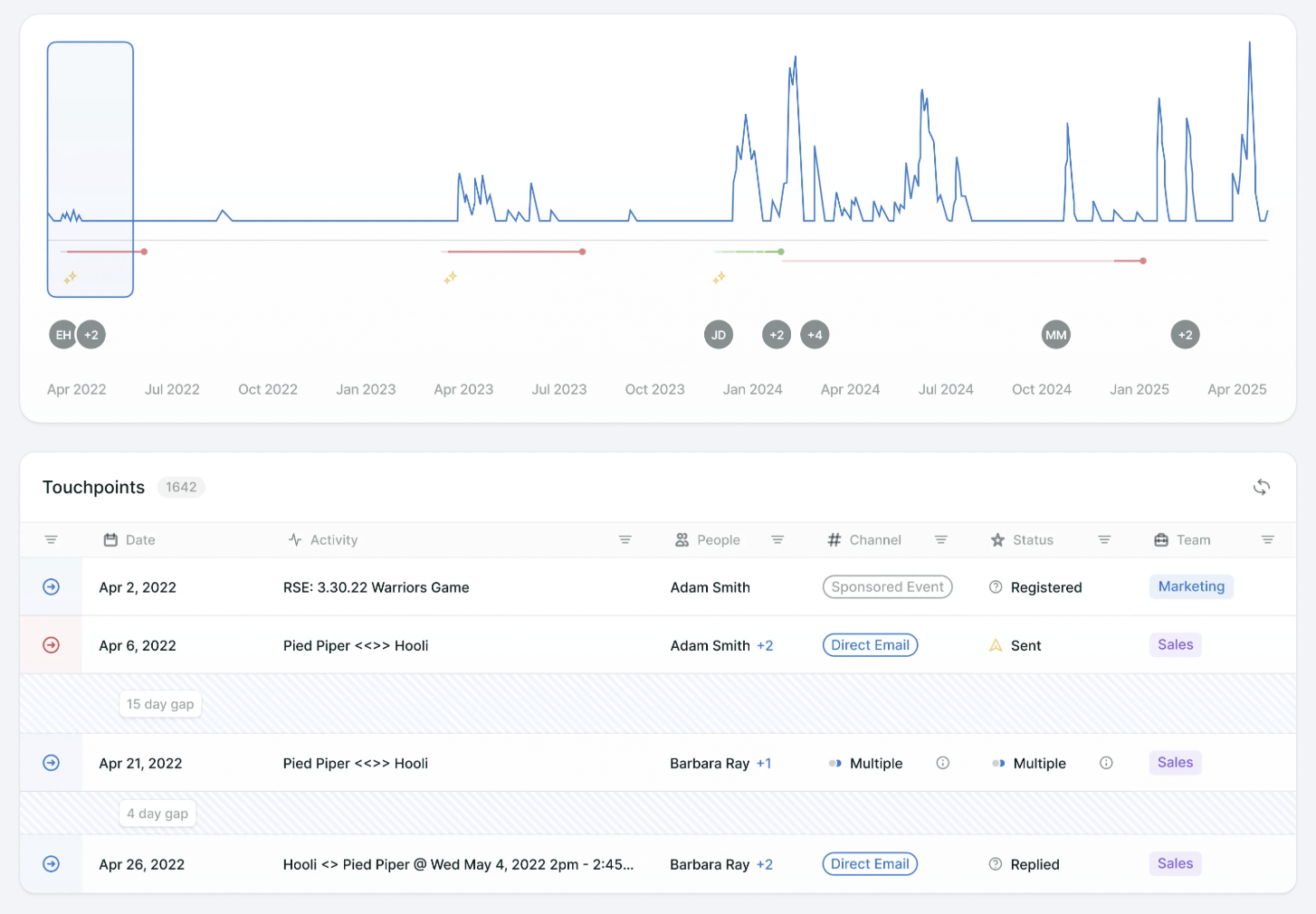
The first feature Cresta worked with Upside on, and still one of the most heavily used. Milestone analysis takes a deal’s full activity history (calls, emails, conferences, SDR touches, internal notes) and reconstructs the deal as a plain-language narrative.
“An SDR called this person. They hung up, they called two times later, they went to a conference, they stopped by the booth. To get a very concise story in natural language of how that thing happened was the killer thing for Upside.”Stephen Daniels
2. Messaging Adherence: Which AEs Followed the Playbook, and Did It Win?
Ted worked with Cresta’s product marketing team to codify the specific messages AEs should be using, then asked Upside to analyze every closed deal for adherence, at the level of “this person followed it to extreme accuracy” versus “this person didn’t follow it at all.”
The output drives three different decisions:
- Validate the messaging: Does following the PMM playbook actually correlate with higher win rates?
- Coach the AEs: Which reps consistently aren’t using messages that convert, and which behaviors should anchor 1:1 coaching?
- Update the messaging: If adherence has no effect on win rate, the playbook itself needs to be rewritten by PMM.
“Upside being able to go into every single deal that’s in there and say, yes, this person followed it to an extreme accuracy, or this person didn’t follow it at all. There’s so many decisions you can make out of that.”Ted Ranney
3. Implementation Sentiment: From Hours of Replay to Automatic Analysis
When Ted joined Cresta, his first assignment was to figure out what made customer implementations move faster or slower.
“I remember my first two or three weeks on the job, they wanted me to analyze what was making certain deployments move faster or slower. Watching Gong call after Gong call, I don’t know how many hours I spent. It was a heck of a way to start, and that was painful. Being able to move from that to just going to Upside and saying, ‘can you help me analyze what’s making implementations work better or worse?’ was a massive improvement for my mental health.”Ted Ranney
Now implementation sentiment, slowdown signals, and at-risk deployments surface automatically. The analytics team can act on findings instead of spending hours producing them.
4. Churn Drivers: Champion Love, Economic-Buyer Gap
Cresta’s most consequential Upside-driven insight came out of a QBR-cycle churn analysis. Like most teams, Cresta had been relying on churn-reason picklists filled in by the AE and CSM. The data was useful but shallow.
Stephen asked Upside to look deeper. Across churned and downgraded deals, what did different personas actually think of Cresta? The analysis split into two layers: how champions perceived the product and team, and how economic buyers (the people signing the check) viewed it.
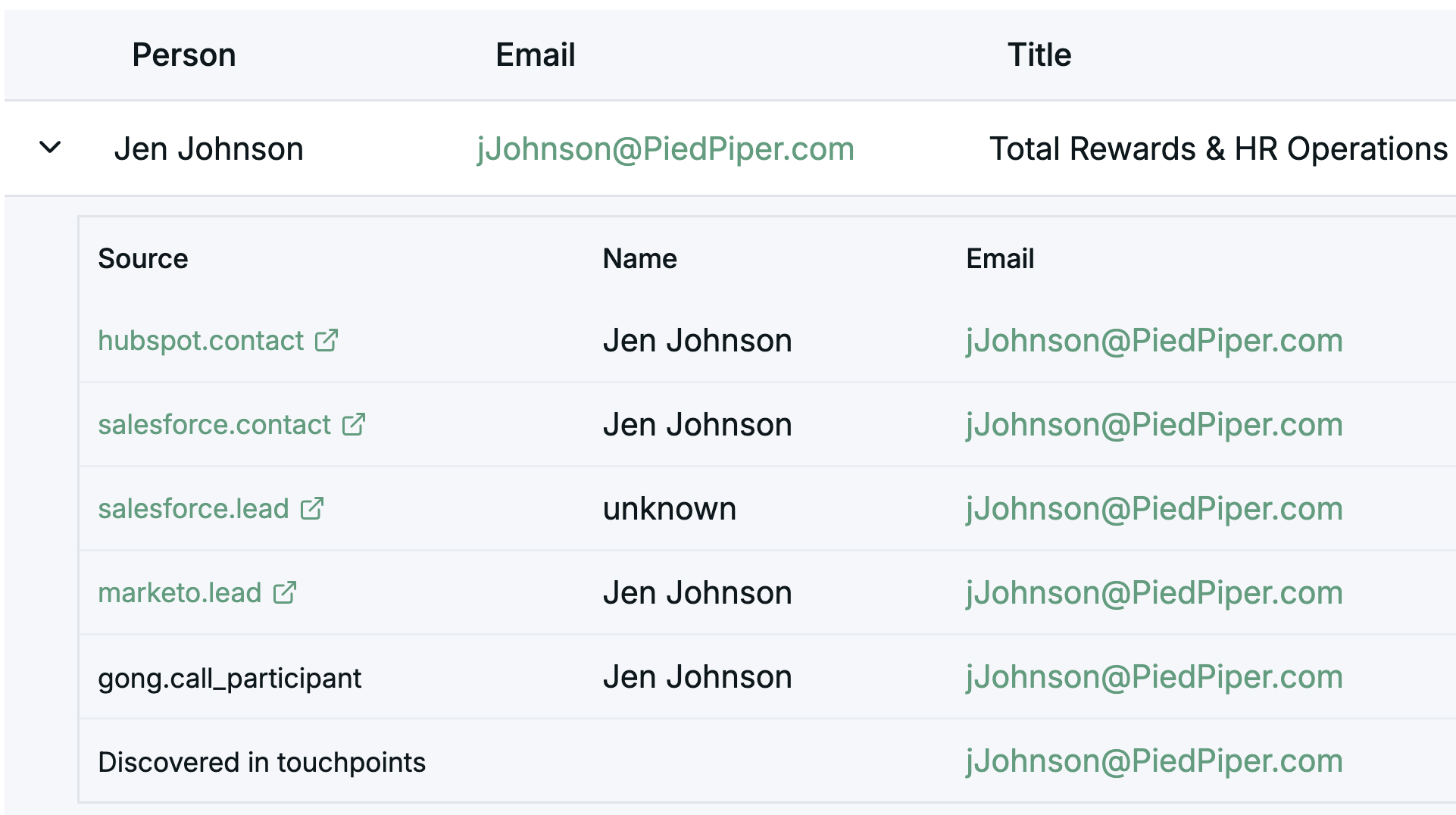
The finding was stark. Champions almost universally loved Cresta, even on deals that ultimately churned. The real gap was at the economic-buyer level: CFOs and equivalents who didn’t see the ROI the way daily users did.
“It’s hard to interpret for someone like a CFO who may not understand the ROI as well as the actual users of the product do. A big takeaway is how do we connect to those financial leaders who think about ROI in a slightly different way?”Stephen Daniels
That insight became a leadership-level assignment for Customer Success and Sales: build a deliberate motion for engaging and educating economic buyers throughout the deal cycle and customer lifecycle.
From Quarterly Analysis to Always-On Workflows
Cresta is doubling down on the deep research motion. Upside now anchors its Quarterly Business Reviews and most consequential GTM decisions, from messaging reviews to churn analysis to deployment insights. Mini-apps are extending those analyses further, putting always-on deal-level intelligence in the hands of more of the team rather than the analytics function alone.
“We owe a lot to how we think about leveraging AI in our data analysis and understanding the business. I don’t think we’d be where we are today or have the expertise we have today without the partnership.”Stephen Daniels